

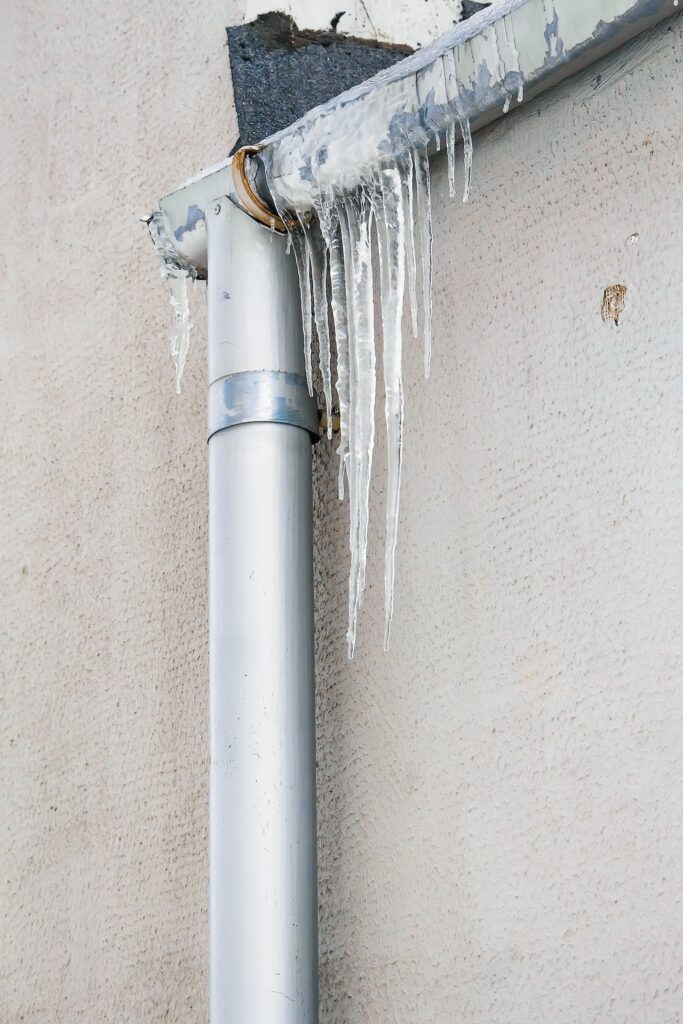
Every winter, homeowners face frozen pipes, water damage, and costly burst-pipe repair bills they could have avoided. When frozen pipes rupture, they can release hundreds of gallons of water per hour, causing major property damage if you don’t address it quickly. A little prep work in October costs far less than emergency plumbing in January.
This checklist walks through exactly what to do each fall, in the order that makes the most sense before the first hard freeze hits.
How Pipes Freeze and Burst
Water expands as it freezes. Ice forms a plug inside a pipe, and pressure builds between that plug and a closed faucet downstream. The pipe doesn’t always rupture at the ice itself. The pressure finds the weakest point in the line, which could be several feet away. That’s why burst pipe repair sometimes involves opening a wall nowhere near where the actual freeze occurred.
The pipes that tend to freeze first are those in exterior walls, crawlspaces, attics, garages, unheated basements, and uninsulated runs. These are the spots to focus on most. Now, let’s look at a checklist of practical steps you can take.
Outdoor Checklist: Do This First
- Disconnect and drain all hoses. A connected garden hose traps water in the spigot and defeats a frost-free design entirely.
- Shut off and drain exterior spigots. Close the interior shutoff, open the spigot, and let it drain fully.
- Add insulated faucet covers. Foam or hard-shell covers on every hose bib are inexpensive insurance.
- Winterize irrigation. Blow out sprinkler lines, shut off the backflow preventer, and insulate any above-grade components.
- Drain pool, pond, and outdoor kitchen lines. Anything with standing water in a supply line needs to be emptied before the freeze.
Crawlspace, Basement, and Garage Checklist
- Insulate exposed supply lines. Foam sleeves or pipe wrap on every run in an unheated space, including elbows and joints.
- Seal air leaks and foundation vents. Cold air blowing directly across a pipe freezes it faster than ambient cold alone.
- Check crawlspace doors and access panels. A door left ajar can turn a protected space into an exposed one.
- Look at the water heater location. Garage and crawlspace water heaters need insulated lines and clear combustion air.
- Consider heat cable or heat tape. Best for chronic problem runs that are susceptible to burst pipe repair. Use UL-listed products with a built-in thermostat.
Indoor Checklist
- Insulate pipes on exterior walls. Kitchen sinks on outside walls are one of the most common freeze points in a home requiring burst pipe repair.
- Locate and label the main shutoff. Everyone in the household should know exactly where it is and how to turn it off.
- Test the main and fixture shutoffs now. A valve that won’t fully close is worthless during an emergency.
- Seal gaps where pipes enter the house. Caulk or spray foam around penetrations under sinks and at the rim joist.
- Replace aging supply hoses. Swap rubber hoses on washing machines, toilets, and sinks for braided steel.
Before a Cold Snap: The 24-Hour Prep
- Open cabinet doors under sinks. This lets heated room air reach the pipes tucked behind the vanity.
- Keep the thermostat steady, day and night. No setbacks below the mid-50s, especially when you’re away from home.
- Drip vulnerable faucets. A slow trickle on the coldest-run fixtures relieves pressure buildup.
- Close the garage door. Especially important if supply lines or a water heater run through the space.
- Leaving town? Shut off the main and drain the system, or arrange for someone to check the house daily.
Factors That Raise Your Freeze Risk
Some homes are more vulnerable than others. Older construction with uninsulated crawlspaces rarely accounted for pipe protection. Additions, bonus rooms, and converted spaces where plumbing was installed after the fact often lack adequate insulation. Vacant and seasonal properties are where the worst burst pipe repair cases and losses happen.
Properties with well systems or above-grade equipment like pressure tanks, pump houses, and exposed well lines are also higher risk and need their own prep. And after any remodeling, new lines in exterior walls deserve a first-winter check before frozen pipes become a problem.
Warning Signs a Pipe Is Freezing or Has Frozen
- No water or just a trickle from one fixture
- Frost or visible bulging on an exposed pipe
- Unusual banging, whistling, or gurgling sounds
- Damp spots, bubbling paint, or a musty smell after a thaw
- Sewer odors or slow drains during cold weather
If a Pipe Freezes: What to Do
Shut off the main immediately, before you attempt to thaw anything in case the pipe has already cracked. Water needs somewhere to go, so open the affected faucet to give melting ice a path out. Thaw slowly using a hair dryer, heat lamp, or warm wet towels, working from the faucet back toward the freeze.
Never use an open flame, which can cause fires and damage pipes and solder joints. If the pipe is behind a wall, under a slab, or already leaking, call a licensed plumber ASAP. Often, they can mitigate the issue before burst pipe repair is needed.
DIY vs. Professional: Drawing the Line
Most homeowners can handle hose removal, faucet covers, foam pipe sleeves, cabinet doors, and thermostat adjustments on their own. Leave the rest to a licensed plumber: failed shutoff valves, water heater service in unheated spaces, repiping vulnerable runs, permanent heat cable installation, and any burst pipe repair after a freeze event.
If you’re worried, schedule an inspection before the weather turns. Finding a stuck valve or an exposed run in October pays for itself by saving you the higher costs of burst pipe repair later.
Start the Habit Now
If you’re at high risk for burst pipe repair, set a reminder for early October every year. Keep a written freeze-prep checklist near the main shutoff. Note which pipes gave you trouble last winter, and schedule your annual inspection before the season gets busy.
Get Expert Help from Excel Plumbing and Heating
If you’d rather have a licensed professional walk through your home, check your shutoffs, and flag any vulnerable runs before the temperature drops, the team at Excel Plumbing and Heating is here for it. Peter and the crew serve Hibbing, Mountain Iron, Virginia, Ely, Tower-Vermillion, and the surrounding Iron Range with upfront pricing and real expertise.
Schedule your fall plumbing inspection at Excel Plumbing and Heating today.
